
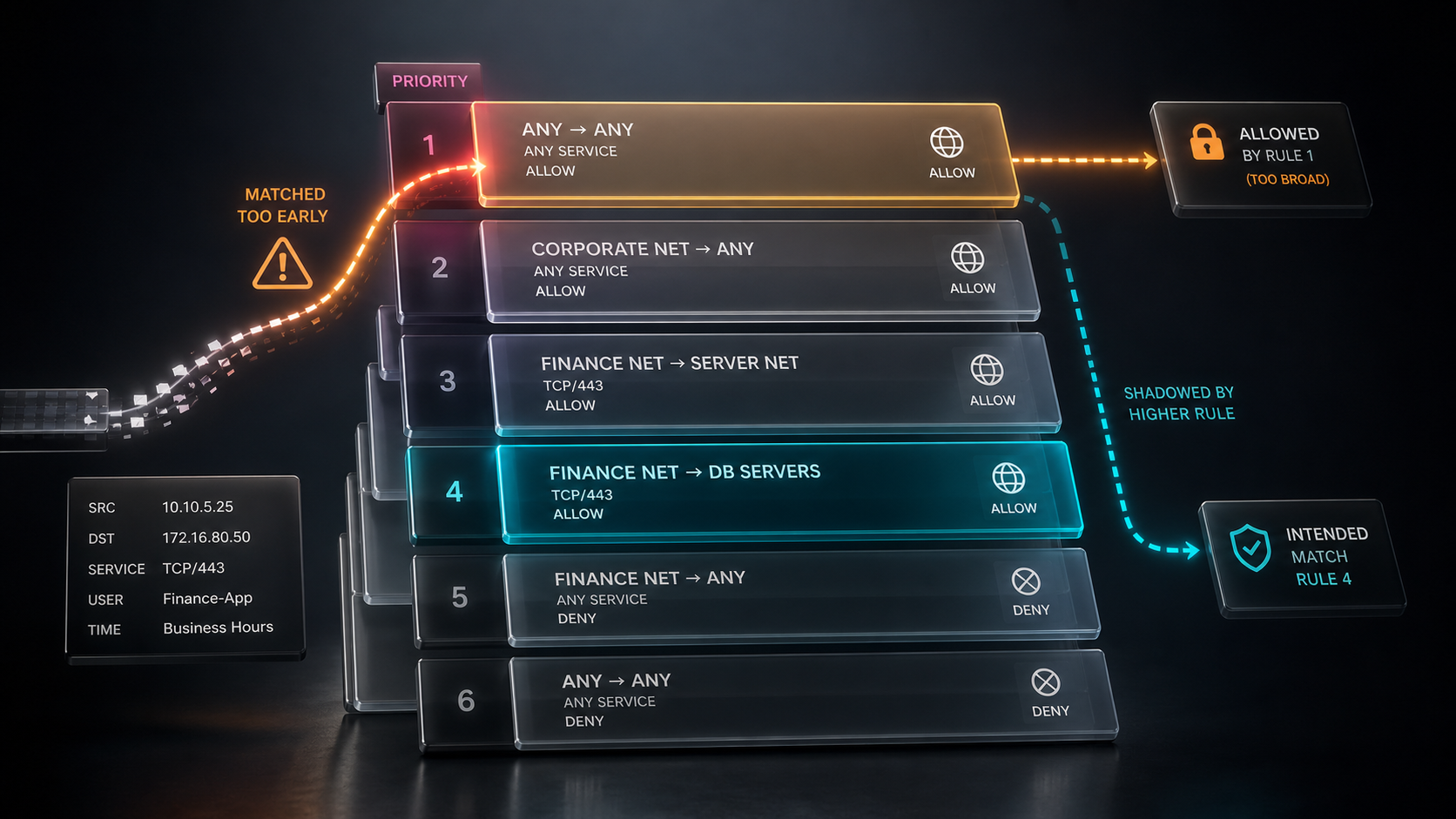
A firewall rule can be perfectly written and still do nothing. In an ordered policy set, an earlier rule may match the traffic first.
This is why reviewing rule content without reviewing placement can produce a false sense of control.
What rule shadowing looks like
Imagine a specific rule allowing one application from a small source network. If a broader allow rule above it already covers the same path, the specific rule may never be reached.
- The lower rule may appear to provide tighter control, but it is ineffective.
- Logging may be recorded against the broader rule instead.
- Removing the lower rule may change nothing, while changing the upper rule may affect many services.
- Engineers may troubleshoot the wrong policy because the expected rule is not matching.
Common causes
- Emergency rules placed near the top of the rulebase
- Large source, destination, or service groups
- Rules copied during migrations
- Old policy left in place after a more specific replacement was added
- Overlapping schedules, interfaces, or Internet-service selectors
Review order safely
Compare the full match conditions, not only the rule name. Check interfaces, addresses, services, schedules, status, action, and any special selectors. Use logs and hit information where available before moving or removing policy.
Run a ConfigSentry audit to highlight likely shadowing and overlap, then let an engineer confirm the business impact before changing rule order.