
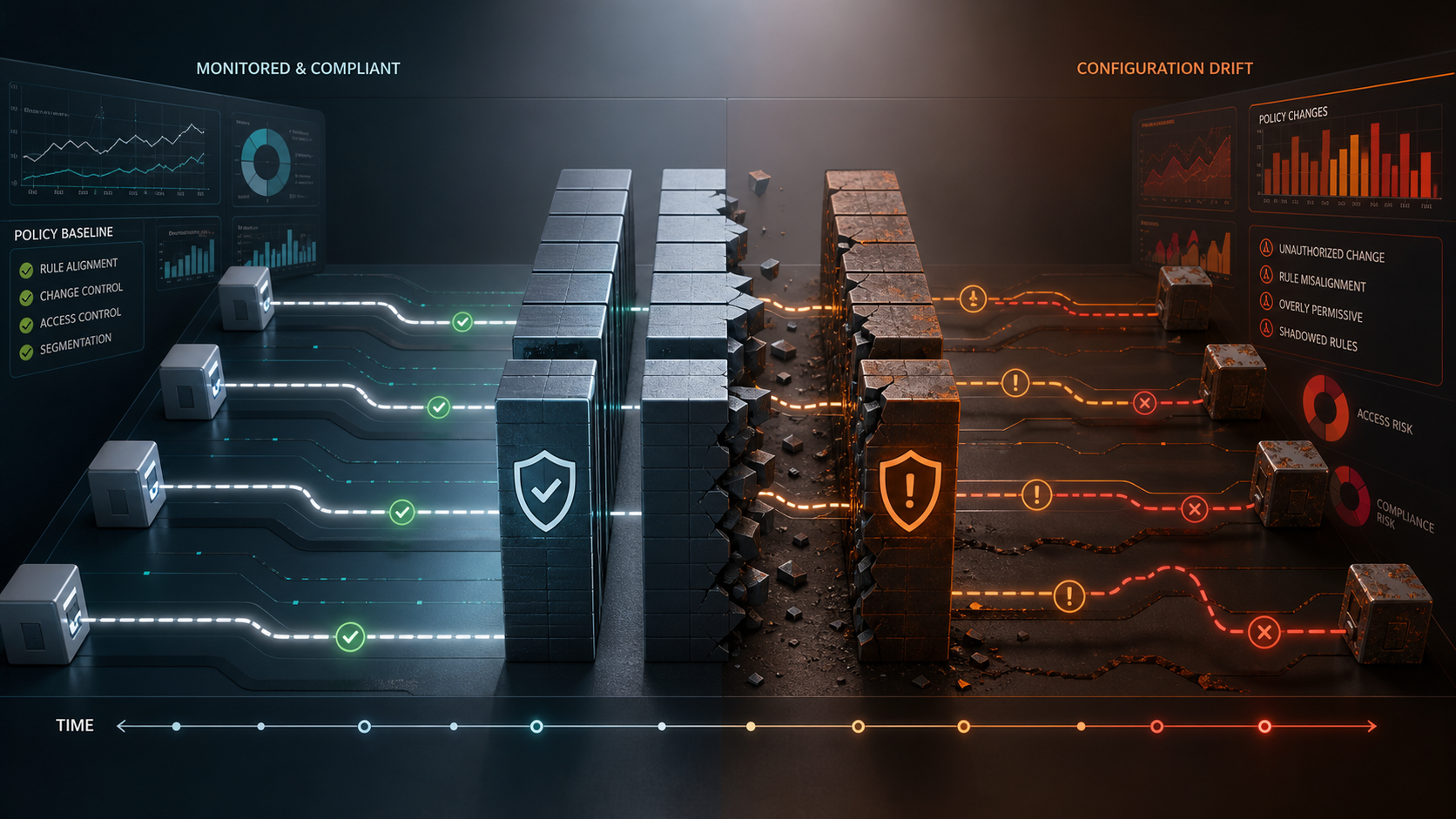
A firewall can pass an audit on Monday and drift away from that result by Friday. Emergency work, vendor access, troubleshooting, migrations, and routine object changes all alter the security posture after the original review.
That does not mean every change is bad. It means a point-in-time result should not be treated as permanent.
Where drift usually comes from
- Temporary rules that are never removed
- Broader service or address groups added to fix an outage
- Logging disabled during troubleshooting
- New administrative access on an interface
- VPN or authentication settings changed for a project
- Security profiles removed to improve performance or compatibility
- Approved remediation later reversed by another change
What recurring review adds
- A consistent baseline across every audit
- Earlier detection of new exposure
- Evidence that remediation remained in place
- A clearer conversation between network, security, and governance teams
- Less pressure before annual or customer-driven reviews
Choose a cadence that matches the risk
A stable lab firewall may not need the same frequency as an Internet-facing production appliance. Base the schedule on change volume, exposure, business impact, and the time your team needs to respond.
ConfigSentry supports manual audits and recurring collector workflows, with lower-touch monitoring available where ongoing visibility is needed.
Run a baseline audit now, fix the important findings, then use scheduled review to confirm that the configuration does not quietly drift back.